Venues
How to win more corporate events for your venue
A beautiful space doesn't fill the diary. What fills it is being found, understood and chosen by the people who make the call. This is the method we use with venues and MICE hotels to win corporate events consistently.
In 30 seconds
- To win corporate events, a venue needs to be findable (search and AI), easy to understand (a public technical spec) and easy to choose (fast replies with a proposal).
- Venue marketing works best when the space is positioned for two or three specific event types rather than “all kinds of events”.
- Event agencies and DMCs are a priority channel: they need a dossier, downloadable visuals and a named contact who actually replies.
- What you should measure is where each enquiry comes from, how many turn into a site visit and why the ones you lose slip away.
Winning more corporate events for your venue has little to do with having the prettiest room in town. It depends on being found, understood and chosen by the people who decide: agencies, DMCs, in-house corporate events teams and, increasingly, the AI assistants that draw up their shortlists. Venue marketing is about removing friction at every one of those steps.
We've spent more than twenty years inside the events industry, on both sides of the table: producing events for major brands and handling communications for venues. What follows is what genuinely moves the needle.
Why your venue isn't winning corporate events (even though it's good)
The short answer: corporate event planners buy certainty, not square metres. They have a client behind them, a fixed budget and very little room for surprises. If your space raises doubts, they move on to the next name on the list.
These are the most common reasons a venue doesn't make the shortlist:
- The website shows lovely photos of empty rooms, but no capacities by layout.
- It doesn't show up when someone searches for “corporate event venue” plus the city or neighbourhood.
- The brochure is a huge, out-of-date PDF that only arrives if you email to ask for it.
- There are no photos or videos of real events held there, so it's hard to picture the set-up.
- Replies to enquiries take days and arrive as a rate card, not a proposal.
- Nobody at the agencies knows who handles sales for the space.
None of these problems is solved by more advertising. They're solved with strategy, content and process.
Step 1: decide which events you're the best choice for
“Perfect for all kinds of events” is the phrase that costs the industry more sales than any other. A planner isn't looking for a space that does everything: they want the best place for their product launch, their conference or their gala dinner. Positioning yourself for two or three specific formats makes you more visible and more credible.
A quick positioning exercise
- List the last corporate events you hosted and mark the ones that went best, for you and for the client.
- Work out what they had in common: format, size, client sector, time of year.
- Write down what makes your space especially good for that format (ceiling height, natural light, location, acoustics, privacy, a terrace).
- Turn that into a sentence a planner can repeat to their client without thinking.
That sentence becomes your website headline, the opening of your brochure and what you want an LLM to say about you when someone asks.
Step 2: make your website answer what planners actually ask
Your website isn't a shop window; it's the first technical meeting. If it answers the questions a planner has before picking up the phone, you'll reach the shortlist with an edge.
The technical spec nobody publishes (and everyone asks for)
- Capacity by layout: theatre, classroom, reception, banquet, cabaret.
- Floor area, clear ceiling height and downloadable floor plans.
- Access, loading bays, goods lifts and build-up times.
- Power supply, rigging, connectivity and available AV equipment.
- In-house, approved or open catering, plus any other exclusive suppliers.
- Noise restrictions, closing time and building or neighbourhood rules.
- Accessibility, nearby public transport and parking.
Publishing this as a web page (not just a PDF) pays off twice: it saves you endless back-and-forth emails and gives Google and AI models concrete information to recommend you on.
One page per event type
If you want to win conferences, gala dinners and product launches, create a page for each, with photos of that format, specific capacities and genuine FAQs. It's the cleanest way to rank for specific searches and to appear in AI assistants' answers, which is exactly what we focus on in AI marketing for events.
Step 3: show the space as if it were already set up
Planners need to picture their client's event in your room. Architectural photos aren't enough. What convinces them is seeing the space in use.
- Photo and video of real events, with the client's permission, showing different layouts.
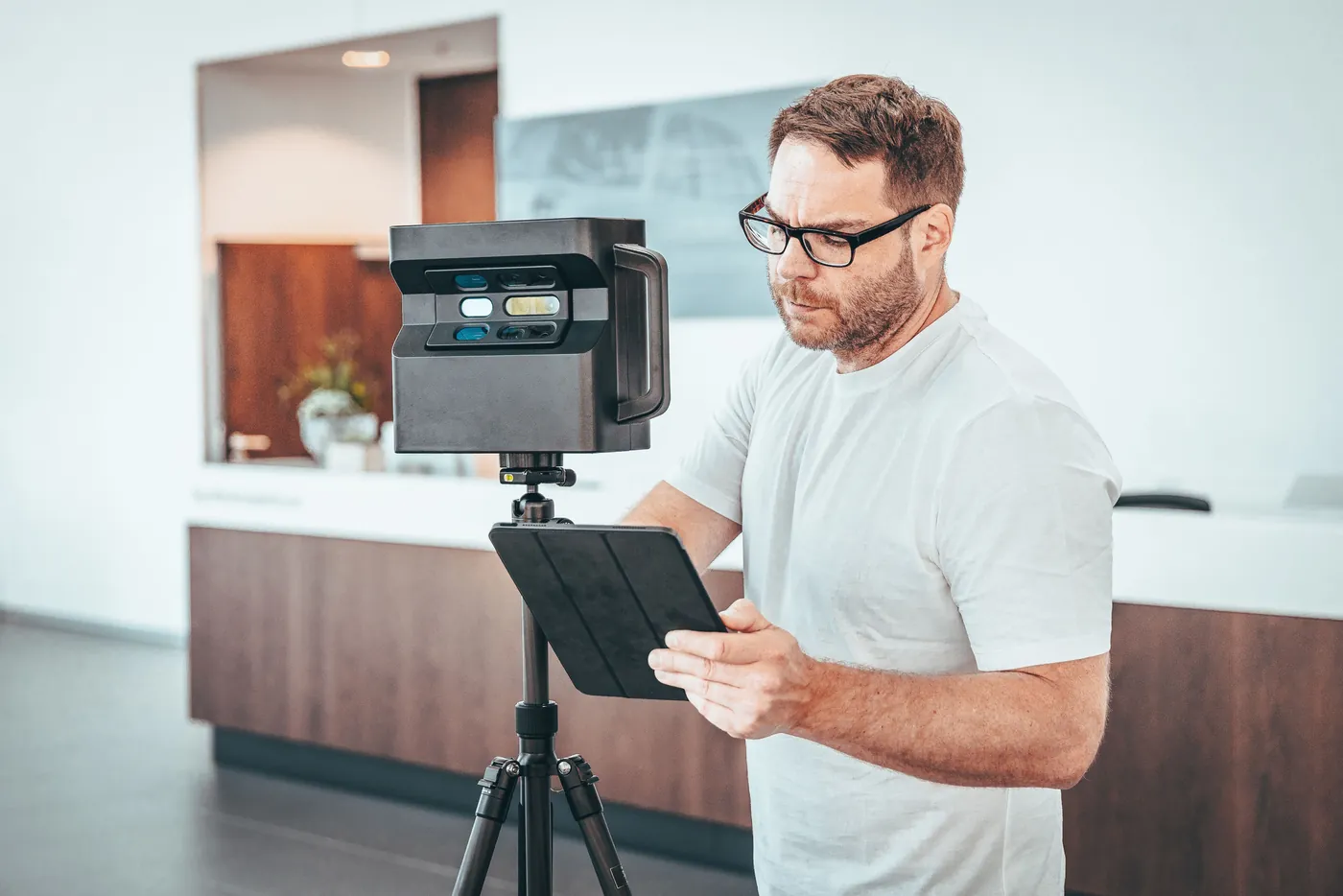
- A 3D virtual tour (Matterport-style) so an agency can show the space to their client without travelling.
- A video WalkAround that moves through the space as a guest would: arrival, registration, main room, networking areas.
- Renders or mock-ups of different layouts when you don't have photos of a particular format.
All of this should be available to download, at a quality an agency can drop straight into its proposal.
Step 4: work on the people who bring you events
A significant share of corporate events comes through event agencies and DMCs. If you're not on their radar, you don't exist for many of their clients.
- Build a list of agencies and DMCs that organise the kind of event you want to win in your city.
- Prepare a dedicated agency pack: technical spec, visuals, partnership terms and a direct contact.
- Run site visits or fam trips with small groups and a good reason to come.
- Stay in touch with useful content: what's new at the venue, recent events, available dates. A short MICE newsletter works better than ten phone calls.
- Be active on LinkedIn, where planners and agencies talk about their projects.
There's more on this approach on our venue marketing page.
Step 5: reply fast, with a proposal rather than a price list
Once an enquiry lands, the clock is ticking. The planner is usually comparing several venues at once, and the first one to reply with a clear proposal starts ahead.
- Keep proposal templates for each event type, already designed, that only need tailoring.
- Include a suggested layout and a couple of ideas for the event: it shows you've understood the brief.
- Always offer a site visit or a video call with the 3D tour.
- Log every enquiry: source, event type, date, outcome.
If you run several rooms or handle a lot of requests, a dedicated venue management and quoting tool will save you hours of spreadsheets. That's exactly what we build in custom event apps and tools.
Step 6: measure what matters
You don't need a mission-control dashboard. These questions are enough to make decisions:
- Where does each enquiry come from: website, agency, referral, social media, AI?
- What share of enquiries turns into a site visit?
- How long do you take to reply?
- Why do you lose the ones you don't close: price, date, capacity, slow response?
With a few months of data, you'll know where to invest and what to stop doing.
Worked example: an industrial space that wants more product launches
Picture a converted warehouse with high ceilings and natural light that currently lives off weddings and the odd corporate event. It wants to win product launches from tech brands.
- Positioning: “The warehouse for launching products in Barcelona: height for staging, direct loading and natural light for content.”
- Website: a dedicated launches page with technical spec, floor plans, rigging and power, plus production FAQs.
- Content: a 3D tour, a time-lapse of a real event build and photos of the space with stage and screens.
- Channel: site visits for agencies working with tech brands and a steady presence on LinkedIn.
- Process: a launch proposal template with two suggested layouts, sent the same day the enquiry arrives.
None of this is magic. It's making the decision easy for whoever is going to choose you.
Where to start this week
If you can only do one thing, publish your full technical spec on your website. If you can do two, add a page for the event type you want most. And if you'd like us to build it with you, from strategy and website to audiovisual and brochure, tell us about your space and the events you want to fill it with: we'll tell you honestly where we'd start.
FAQ
What is venue marketing?
It's the combination of positioning, content, website, agency relationships and sales management that helps an event space get found, understood and chosen by the people who organise corporate events.
How can a venue win corporate events without relying only on agencies?
By optimising its website for specific searches (event type plus city), publishing its full technical spec, producing visuals from real events and being active on LinkedIn, where corporate events teams spend their time. Agencies remain key, but they shouldn't be the only channel.
Is a 3D virtual tour worth it for selling a venue?
Yes, especially for agencies and clients who can't make a site visit. It lets you show the space on a video call or inside a proposal, and it removes doubts about layout and dimensions.
How long does venue marketing take to show results?
Process improvements, such as replying faster and with a proposal, show up almost immediately. Ranking in search engines and AI assistants, and building agency relationships, is longer-term work that consolidates over months of consistent effort.